
CNS Stimulants vs. CNS Depressants: What’s the Difference?
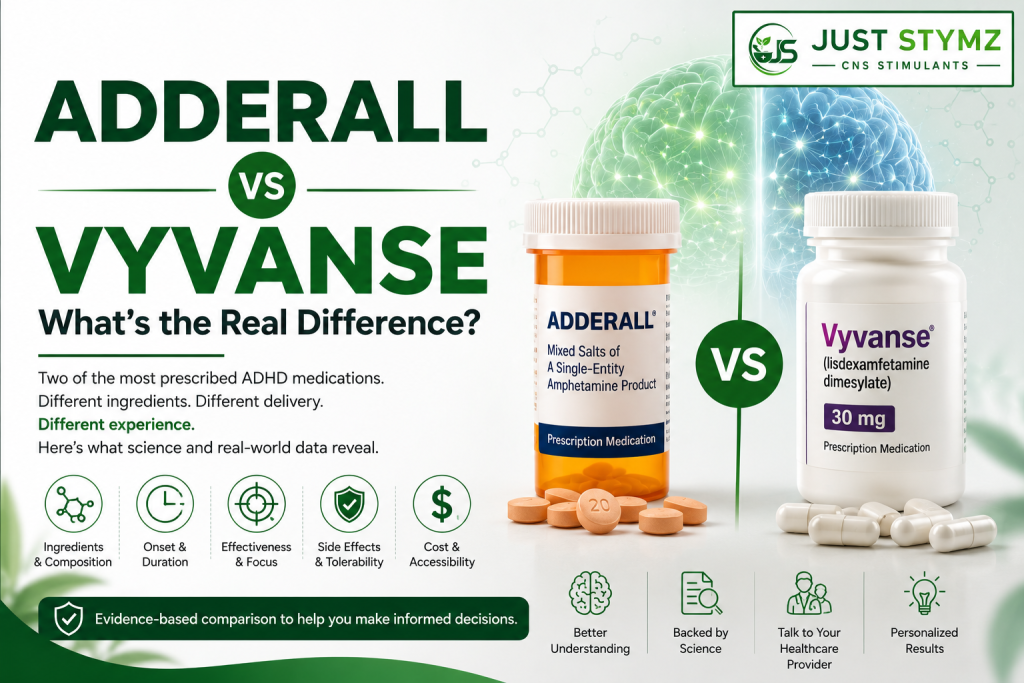
Central nervous system (CNS) stimulants and CNS depressants sit at opposite ends of the same spectrum. Both act on the brain and spinal cord, but they push activity in completely different directions. Stimulants speed things up. Depressants slow things down. Confusing the two, or mixing them without medical guidance, can be genuinely dangerous. This guide breaks down how each class works, what they’re used for, and why understanding the difference matters for anyone taking either type of medication in the US, Canada, or Australia.
The Core Difference: Speeding Up vs. Slowing Down
CNS stimulants increase activity in the brain and nervous system. They boost dopamine and norepinephrine, two brain chemicals that drive alertness, focus, and the body’s fight-or-flight response. As a result, heart rate, blood pressure, and mental alertness typically rise after taking a stimulant. Common examples include Adderall, Vyvanse, Ritalin, and Concerta.
CNS depressants do the opposite. They enhance the activity of GABA, the brain’s main calming neurotransmitter. Consequently, brain activity slows down, muscles relax, and anxiety eases. Heart rate and breathing typically slow as well. Common examples include benzodiazepines like Xanax and Valium, barbiturates, and alcohol. Sleep medications such as zolpidem also fall into this category.
In short, stimulants push the nervous system toward “go,” while depressants push it toward “stop.” Neither direction is inherently better or worse. Each simply suits different medical situations. Think of the nervous system as running on a dial rather than a simple on/off switch. Stimulants turn that dial up. Depressants turn it down. Where a person’s baseline sits, and what condition they’re managing, determines which direction of adjustment actually helps.
How Regulators Classify Stimulants and Depressants
Both drug classes carry legal controls because of their potential for misuse, though the specific rules vary by country. In the United States, most prescription stimulants sit under Schedule II of the DEA’s classification system, alongside many depressants like certain barbiturates. Benzodiazepines are typically Schedule IV, reflecting a somewhat lower but still real risk profile.
In Canada, prescription stimulants fall under Schedule I of the Controlled Drugs and Substances Act. Benzodiazepines are generally classified separately, under Schedule IV, which involves a different set of prescribing and dispensing rules. In Australia, stimulants are usually Schedule 8 medications requiring an authority prescription, while many depressants, including benzodiazepines, sit under Schedule 4, meaning they need a standard prescription but face fewer additional restrictions.
These classification differences matter in practice. A Schedule 8 stimulant in Australia typically requires more paperwork, tighter quantity limits, and closer monitoring than a Schedule 4 depressant. Patients moving between these countries, or filling prescriptions while travelling, should expect to navigate different rules depending on which class their medication falls into.
What Conditions Each Class Is Used to Treat
Doctors prescribe CNS stimulants mainly for ADHD and narcolepsy. Stimulants improve focus and reduce impulsivity in people with ADHD. For narcolepsy, they help patients stay awake and alert during the day. Some stimulants also treat binge eating disorder or, less commonly, treatment-resistant depression under specialist supervision.
CNS depressants, meanwhile, treat a very different set of conditions. Benzodiazepines are prescribed for anxiety disorders, panic attacks, seizures, and short-term insomnia. Barbiturates are used less often today but still appear in some anaesthesia and seizure protocols. Alcohol isn’t prescribed, of course, but it’s the most widely used depressant substance, and it interacts with prescribed depressants and stimulants alike.
Because their effects are opposite, stimulants and depressants are rarely prescribed together. When they are, it’s usually because a patient has two separate, legitimate conditions, such as ADHD alongside an anxiety disorder. In these cases, doctors monitor the combination closely. They often start with the lowest effective dose of each medication and adjust gradually based on how the patient responds.
It’s worth noting that some medications don’t fit neatly into either category. Modafinil, for instance, is classified as a wakefulness-promoting agent rather than a traditional stimulant, since its mechanism differs somewhat from amphetamines. Similarly, some newer sleep medications work on different brain pathways than classic depressants, even though their calming effect looks similar on the surface. This is why the stimulant-versus-depressant framework, while useful, isn’t a perfect binary for every drug on the market.
Why Mixing Stimulants and Depressants Is Risky
Mixing a stimulant with a depressant is particularly dangerous because the two substances can mask each other’s effects. For example, someone who drinks alcohol while taking a stimulant may not feel as intoxicated as they actually are. This happens because the stimulant partially counteracts the depressant’s sedating effects on the surface, even though the underlying impairment and health risks remain. As a result, people in this situation often drink more than they realise, which raises the risk of alcohol poisoning.
The reverse combination carries its own dangers. Taking a depressant on top of a stimulant can strain the heart, since one substance pushes heart rate up while the other tries to pull it down. This tug-of-war places extra stress on the cardiovascular system. In some cases, particularly with high doses or recreational use, this combination has been linked to serious cardiac events.
Combining a prescription stimulant with a prescription depressant without medical guidance is equally risky, even when both are legitimately prescribed. This is exactly why doctors ask about all current medications, including sleep aids and anti-anxiety prescriptions, before starting a stimulant. It’s also why patients should always disclose recreational substance use to their prescriber, even if it feels uncomfortable to bring up.
Common Situations Where the Two Classes Overlap
A few everyday scenarios illustrate why this distinction matters beyond the doctor’s office. Someone taking Adderall for ADHD who also drinks coffee and alcohol at a social event is layering a stimulant, another mild stimulant, and a depressant all in the same evening. Their body has to process three substances pulling in different directions, which makes side effects harder to predict.
Someone taking a benzodiazepine for anxiety who also uses an energy drink or over-the-counter stimulant for fatigue faces a similar mismatch. The stimulant can mask how sedated they actually are, while the depressant is still slowing their reflexes and judgment underneath. Neither substance cancels the other out safely; they simply compete, and the body pays the cost of that competition.
Shift workers represent another common overlap point. Someone using a stimulant to stay alert through a night shift, then a depressant to fall asleep afterward, is cycling the nervous system between two extremes on a tight schedule. This pattern can work safely under medical supervision, but it deserves closer monitoring than either medication alone.
Withdrawal Looks Different for Each Class
Stopping a CNS stimulant after regular use can cause fatigue, low mood, and increased appetite. These symptoms are uncomfortable but generally not medically dangerous on their own. Most people can taper off a stimulant under medical guidance without serious complications.
Stopping a CNS depressant, particularly a benzodiazepine or alcohol, is a different story. Abrupt withdrawal from these substances can cause seizures, and in severe cases, it can be life-threatening. This is one of the most important distinctions between the two drug classes. For this reason, anyone stopping a long-term depressant should always do so under medical supervision, with a gradual taper rather than a sudden stop.
Side Effects Compared
Stimulant side effects generally reflect their “speeding up” nature. Decreased appetite, difficulty sleeping, dry mouth, and a faster heart rate are all common. Some people also notice mild anxiety or jitteriness, especially early in treatment or at higher doses.
Depressant side effects reflect the opposite pattern. Drowsiness, slowed reaction time, memory problems, and impaired coordination are typical. Long-term use of some depressants, particularly benzodiazepines, also carries a risk of tolerance and dependence, which is why most guidelines recommend short-term use where possible.
Both classes carry a risk of misuse, though the mechanisms differ. Stimulant misuse often centres on performance or focus enhancement, such as unprescribed use to study. Depressant misuse often centres on managing anxiety, sleep, or seeking sedation, sometimes alongside alcohol.
How to Tell Which Category a Medication Falls Into
If you’re unsure whether a medication is a stimulant or a depressant, the clearest clue is its effect on energy and alertness. Medications that increase focus, reduce sleepiness, or speed up heart rate are almost always stimulants. Medications that promote calm, ease anxiety, or induce sleep are almost always depressants.
Reading the medication guide that comes with any prescription is the most reliable way to confirm this. Pharmacists are also a reliable, fast source of this information if you’re ever uncertain about a new prescription, a supplement, or an over-the-counter product.
The Bottom Line
CNS stimulants and CNS depressants work in opposite directions within the same nervous system. Stimulants increase alertness, focus, and heart rate, while depressants promote calm, relaxation, and sedation. Each class treats a distinct set of conditions, from ADHD and narcolepsy on the stimulant side to anxiety, seizures, and insomnia on the depressant side. Because their effects oppose each other, combining them without medical guidance carries real risks, particularly for the heart and for withdrawal safety. Anyone taking either type of medication should keep their prescriber fully informed about every other substance they use, prescribed or otherwise, to keep treatment both effective and safe.